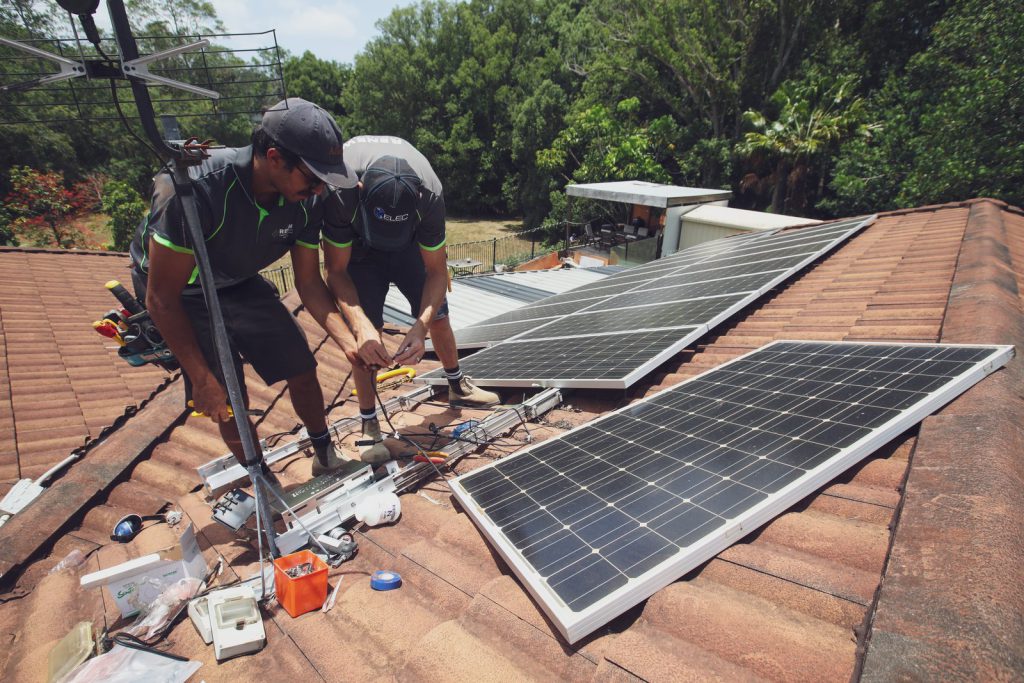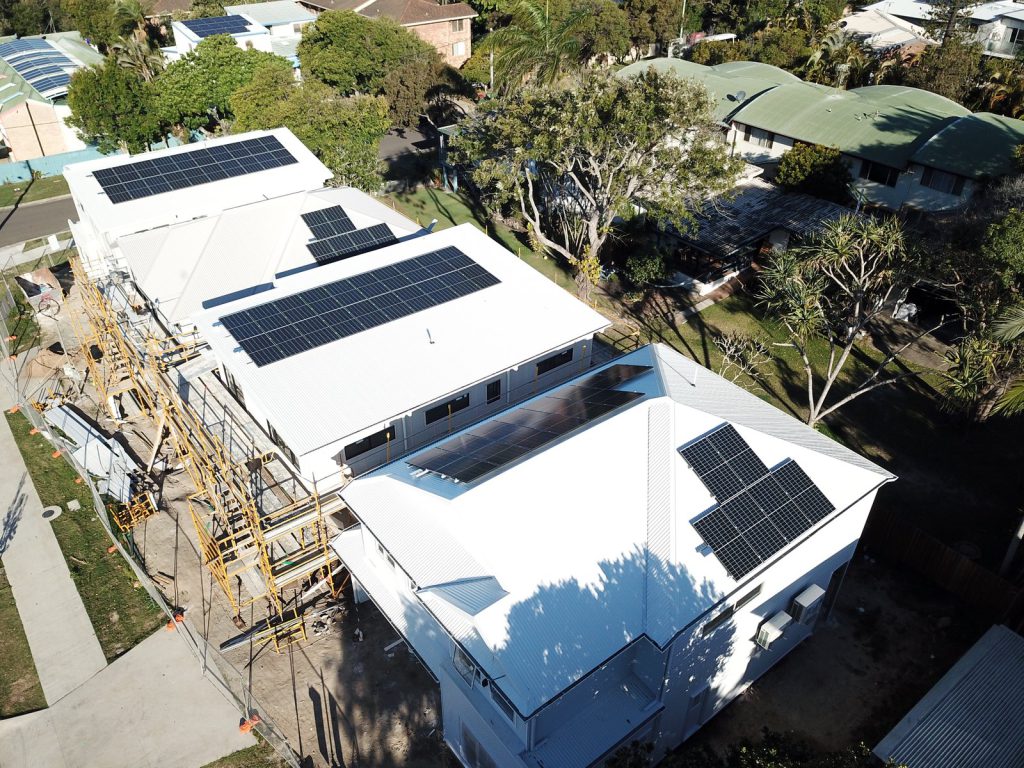
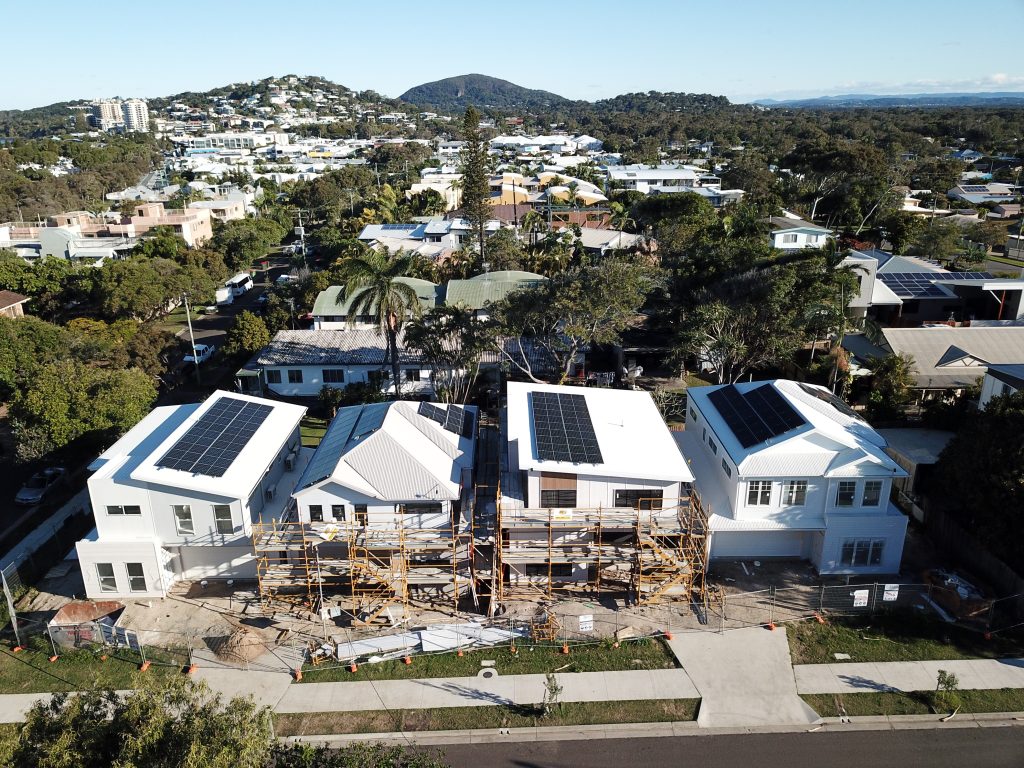
Why install solar while the townhouses are still being built?
There was a clear difference between retrofitting solar onto a finished home and building it into the construction schedule from the start. Both are possible. On a new build, though, the builder and solar installer can plan roof access, electrical work and commissioning around the work already happening on site.
For 3 Bays Construction, the objective was simple: deliver four completed townhouses with their solar systems already in place. The project handover notes record no unusual site constraints. The real task was keeping four similar installations aligned with the builder’s schedule so that solar did not become a post-handover retrofit.
What did Renew Energy Solutions install?
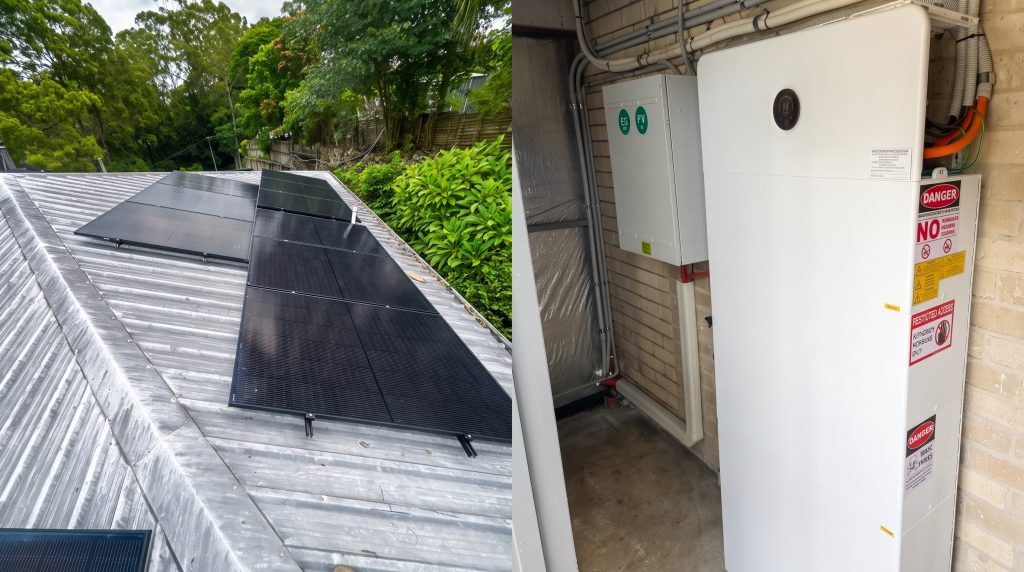
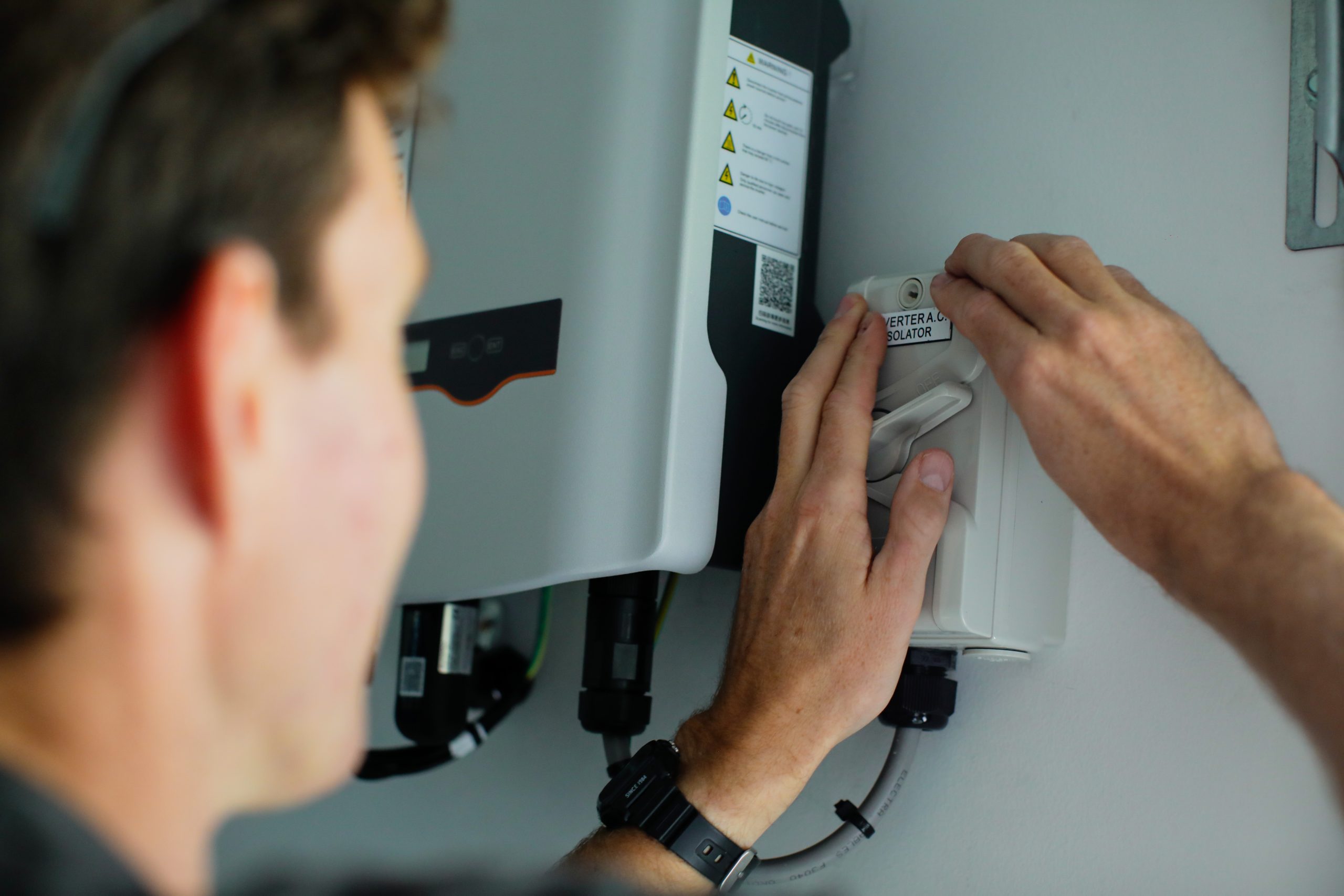
Each townhouse received 20 Jinko panels rated at 330 watts each. That adds up to 6,600 watts, or 6.6kW, of installed panel capacity per home. Each array was paired with its own 5kW Sungrow inverter to convert electricity from the panels into usable household AC power.
Multiply that across four properties and the completed development had 80 panels and 26.4kW of combined panel capacity. Importantly, this was not described as one large shared system. Each townhouse had an independent solar installation.
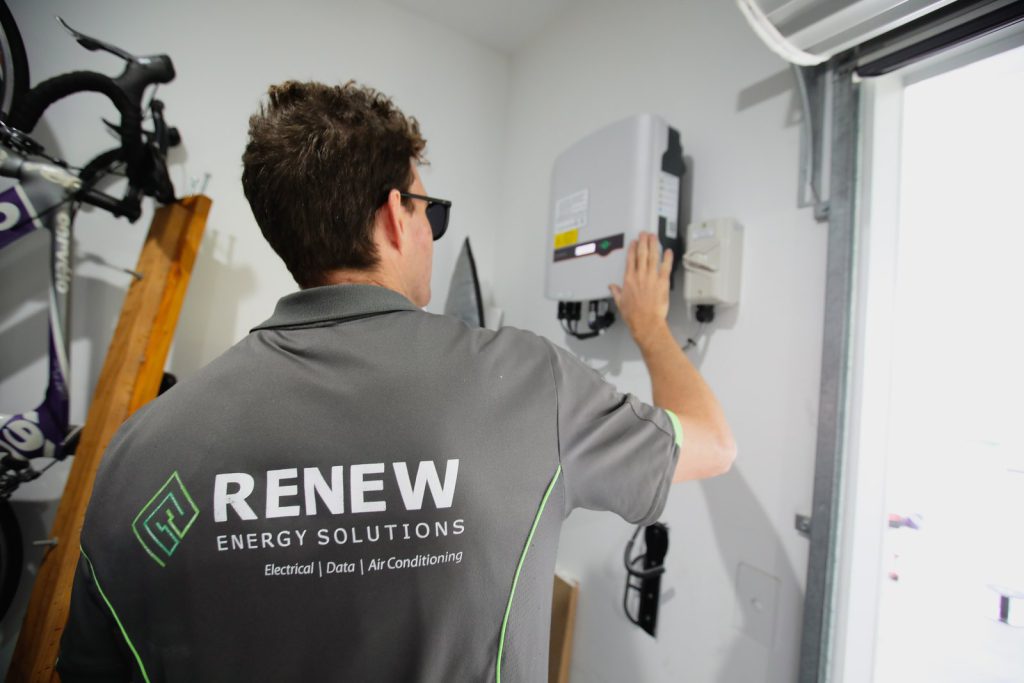
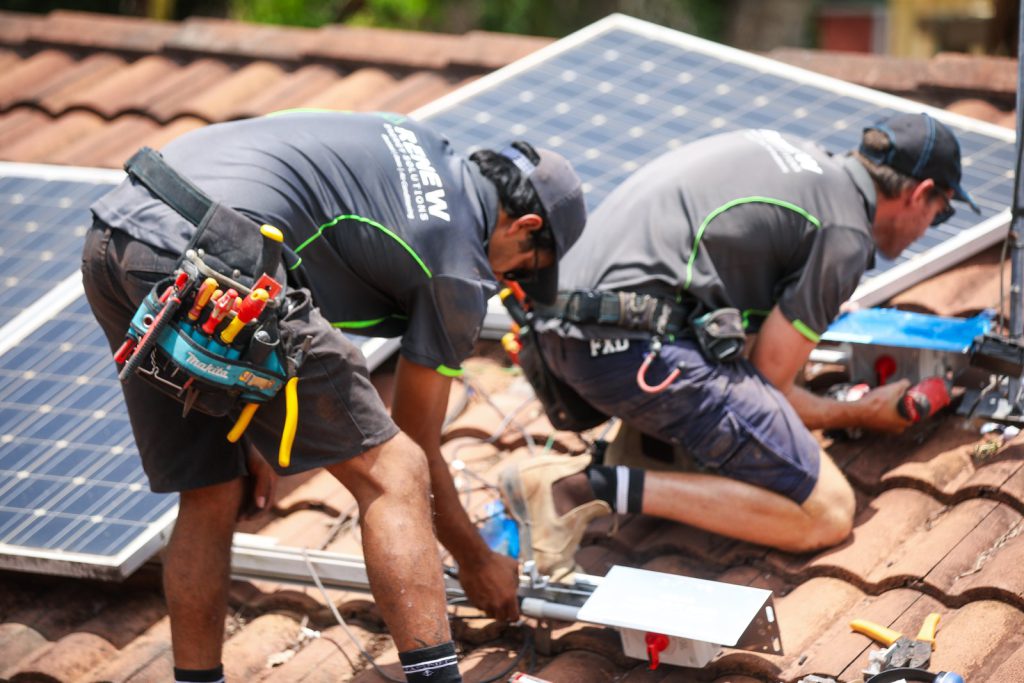
RES coordinated the work with the new-build program, installed the equipment and completed commissioning before handover. The handover record does not provide measured electricity generation, bill reductions or battery storage, so those are not claimed as outcomes here.
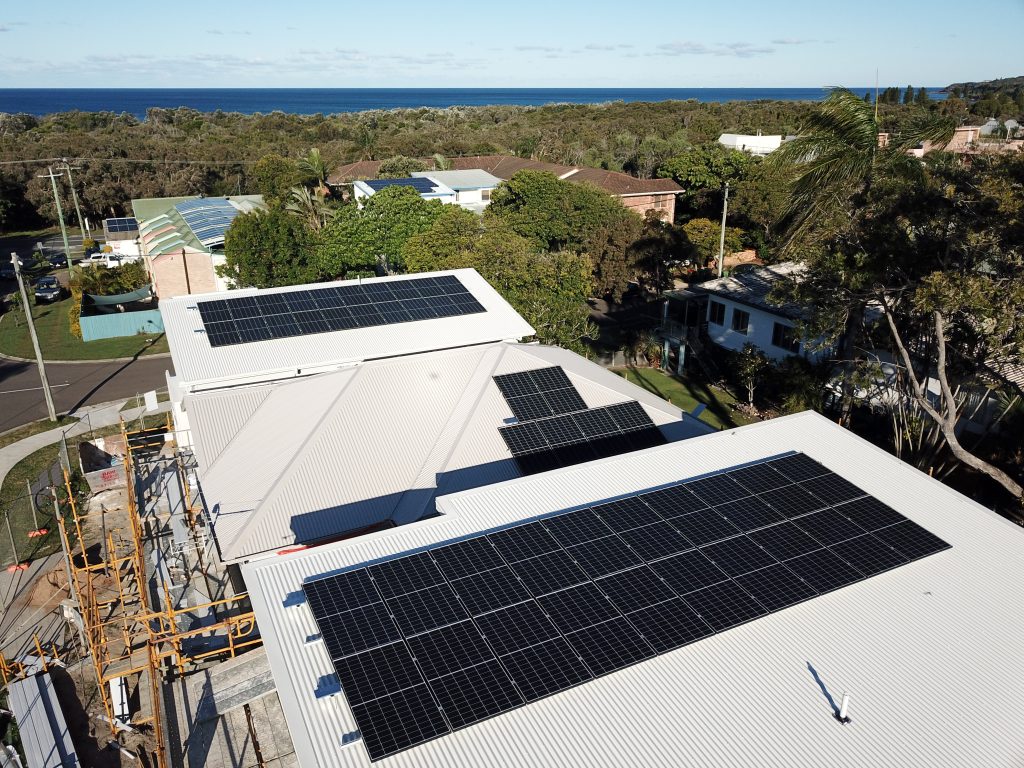
Can 6.6kW of solar panels be paired with a 5kW inverter?
Yes. The two figures describe different parts of the system. The 6.6kW figure is the combined nameplate rating of the solar panels under standard test conditions. The 5kW figure describes the inverter’s rated AC output. Panels do not produce their nameplate maximum all day: sunlight, temperature, roof orientation and other conditions change actual output.
A panel array can therefore have a higher rated capacity than its inverter. Whether a particular combination is suitable still depends on the equipment, electrical design and network connection requirements. A 6.6kW array with a 5kW inverter is what was installed for each of these four homes; it is not a one-size-fits-all recommendation.
When should builders plan solar for a new home?
The best time to raise solar is before the roof, switchboard and handover dates are treated as fixed. An early conversation helps the builder and installer work through three practical stages.
1. Before installation: review roof space, orientation, shade, structural and access considerations, and where electrical equipment and cable routes may need to go. Confirm the intended system and arrange the relevant distributor connection process.
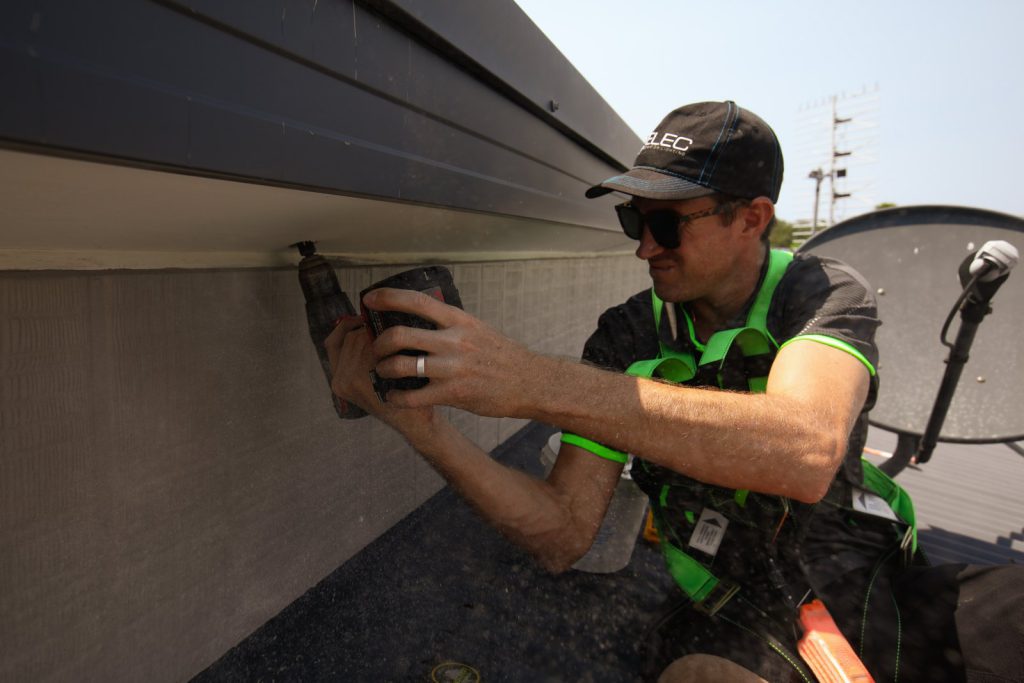
2. During construction: coordinate access and installation with roofing and other trades. A multi-home site needs a clear plan for which system belongs to which dwelling, as well as safe sequencing of the electrical work.
3. Before handover: allow time for testing, commissioning, required metering arrangements and useful homeowner information. A system that looks finished on the roof is not necessarily cleared to operate and export yet.
These are general planning considerations, not a claim that every listed task was individually documented for the Coolum Beach job. Queensland Government guidance says distributor approval is required before grid connection, and the local distributor’s metering requirements must also be met.
What does ‘solar ready at handover’ actually mean?
It means more than leaving a set of panels on the roof. The installation needs to be completed and tested, and the homeowner needs clarity about the equipment and how to operate it. For grid-connected systems, the approval and meter arrangements matter too.
In this Coolum Beach project, RES reported that all four solar systems were commissioned and independently operational at handover. For future developments, build the connection, metering and handover steps into the timetable rather than assuming they can always be resolved on the final day.
How much solar does a new townhouse need?
The right system size depends on the home, not just the number of bedrooms or the fact that it is newly built. Roof shape and shading determine what can be installed; household electricity use determines how useful that generation will be. Air conditioning, work-from-home patterns, hot water and future EV charging can all change the calculation.
On this site, the documented choice was 6.6kW for each townhouse. That is a factual description of the project, not a promise that 6.6kW is ideal for every townhouse on the Sunshine Coast. RES’s solar installation guidance likewise starts with electricity usage, roof conditions and future plans.
Will rooftop solar lower the future residents’ electricity bills?
Solar can reduce the amount of electricity a home needs to buy from the grid when generation and household use happen at the same time. If permitted, surplus electricity may also be exported under the resident’s electricity arrangement. But real savings depend on consumption patterns, tariffs, network settings and the output of the installed system.
The project documents confirm installed capacity and successful commissioning; they do not contain before-and-after bills or monitored performance figures. For that reason, it would be misleading to attach a dollar saving, payback period or annual generation estimate to these four homes.
Do the townhouses need batteries as well?
Not necessarily. A battery can store some of a home’s daytime solar energy for later use, but it adds costs and design decisions. Its value depends on evening electricity use, available solar surplus, desired backup arrangements and equipment compatibility.
No battery installation is recorded in this project. Anyone considering storage later should have the existing inverter model, electrical supply and intended battery arrangement checked rather than assume every 5kW inverter can accept any battery.
What about solar rebates and grid approval in Queensland?
Eligible rooftop solar installations may qualify for Small-scale Technology Certificates (STCs), which are commonly reflected as an upfront discount through a registered agent. Eligibility depends on the equipment, installer, system and scheme rules in force at installation not simply on a home being new.
Grid connection is a separate consideration. Queensland guidance requires approval from the relevant electricity distributor before installation, and appropriate export metering is needed before an export-capable system is switched on. Builders should ask their installer who is handling these steps and how they fit with the handover. Incentives, export permissions and feed-in tariffs should always be checked against current official and retailer information.
The Coolum Beach outcome: solar handled before the keys were handed over
Four townhouses were completed with four separate solar systems already installed and commissioned. From a construction point of view, the achievement was coordination: 3 Bays Construction did not have to leave solar as a follow-up installation for residents to organise after moving in.
For the future occupants, each home began with its own solar generation system. There is no need to invent a dramatic technical problem to make this project interesting. Its value is in getting the planning, installation and timing right across four homes.
“The guys at Renew are fantastic, very professional and their attention to detail is second to none.”
Zac C., Google review
Frequently asked questions
Can a townhouse have its own solar system?
Yes, depending on the building, ownership and electrical arrangements. In this Coolum Beach project, each of the four townhouses had its own independent system.
Does solar need to be installed after construction is finished?
No. Solar can be integrated into a new-build schedule when roof access, safe electrical work, network approvals and commissioning are properly coordinated.
Is a 6.6kW system enough for every new home?
No single size suits everyone. Roof conditions, expected demand, future appliances and the applicable connection requirements should guide the design.
Can a solar system be used as soon as the panels are fitted?
Not automatically. Completion of the physical installation is different from approval, metering and safe commissioning. Ask the installer to confirm when the system is ready to operate.
Should a builder involve the solar installer before handover?
Ideally, yes; earlier in the build is better. That leaves room to discuss roof layout, inverter placement, electrical provisions and approval or metering lead times.
Planning solar for several new homes?
If you are building townhouses, planning a new home or coordinating multiple properties on the Sunshine Coast or in Brisbane, talk to Renew Energy Solutions while the plans are still taking shape. We can discuss the site, proposed systems and practical timing so the solar work fits the project.