
Home / Commercial / Commercial battery storage (BESS)
Commercial / Solar & energy
Commercial battery storage (BESS)
Storage with a clear purpose. Assess load shifting, solar storage and backup requirements against your site’s data and operating priorities.
Local electricians · Clear advice · Ongoing support
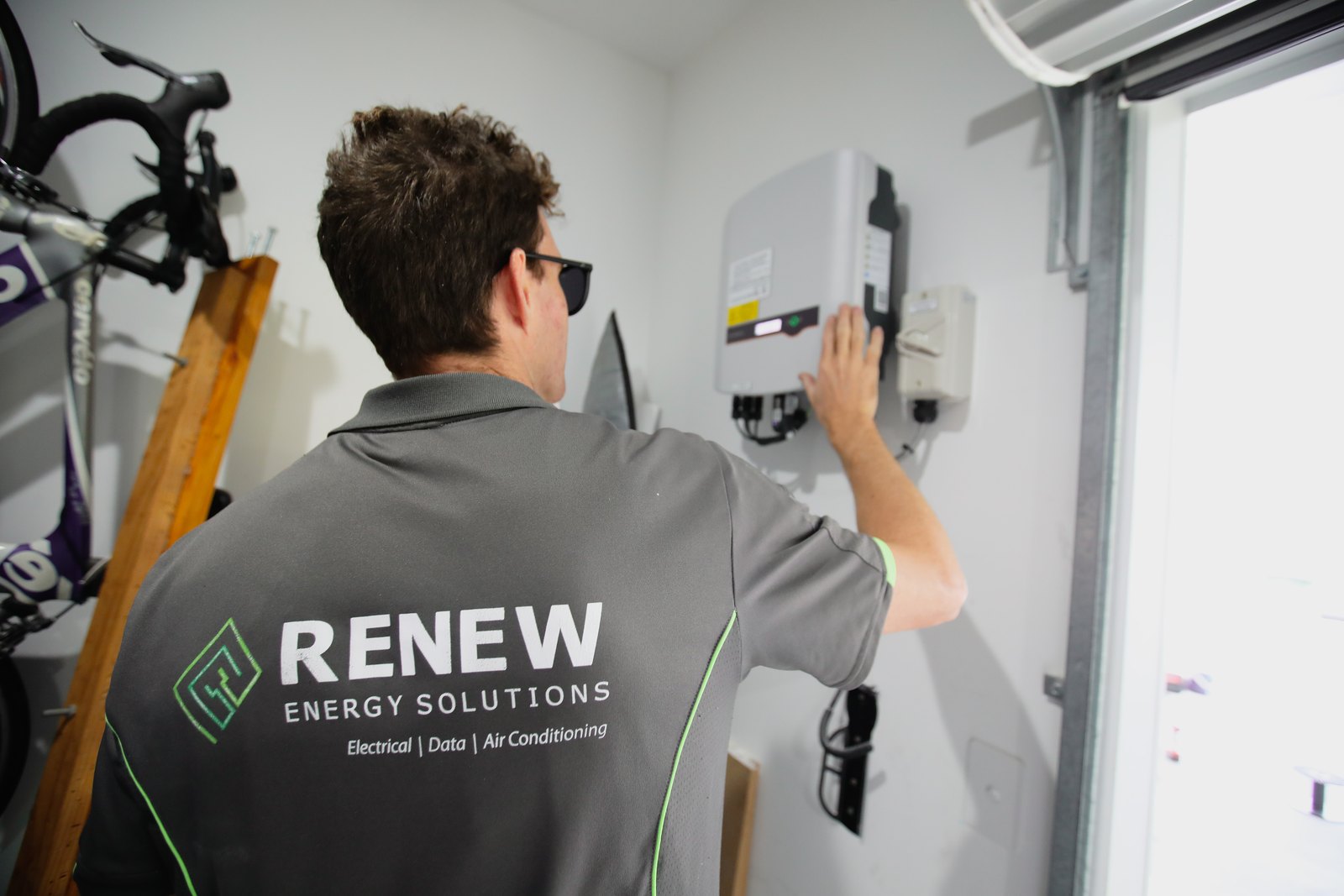
Demand charges, and why they hurt
Many commercial tariffs include a demand charge based on your highest measured interval over the billing period, not on your total usage. One compressor starting at the wrong moment, or one hot afternoon where everything runs at once, can set that figure for the whole month.
A battery can discharge into short demand peaks, where the battery’s power and available charge are sufficient. Because the charge is set by the maximum rather than the average, shaving a handful of intervals a month can produce a saving out of all proportion to the energy involved.
What a commercial battery is used for
Peak demand reduction
Discharging into short demand peaks, with results depending on the battery’s power, charge level and control settings.
Load shifting
Storing cheap or self-generated energy and using it during expensive periods.
Backup for critical loads
Keeping refrigeration, servers, security or production running through an outage.
Solar time-shifting
Holding midday generation for use outside daylight hours where operations run late.
Sizing it against real data
Commercial storage is sized from interval data, not from a rule of thumb. The data shows the shape of your load, where the peaks sit, how long they last and how often they occur. Those three things, magnitude, duration and frequency, determine both the power rating and the capacity you need.
A short, sharp peak needs high power and modest capacity. A sustained evening load needs the opposite. Getting this wrong in either direction is expensive, which is why we start with a feasibility and site assessment.
Backup is a design decision, not a feature. Deciding which circuits stay live in an outage, and for how long, changes the system substantially. Work out what genuinely cannot stop before sizing anything.
Working alongside solar
Storage and solar complement each other but solve different problems. Solar reduces the energy you buy. Storage reduces what you pay for the way you buy it. On sites where the load peak sits outside daylight hours, storage is often the component that makes the whole business case work.
Good to know
Your questions, answered.
Will a battery pay for itself?
It depends entirely on your tariff and load shape. On sites with significant demand charges the case can be strong. On simple consumption tariffs it is usually weaker. The data tells us which you are.
Can we add storage to existing solar?
Generally yes. The existing inverter arrangement affects the options, which we assess on site.
How long can it run our site in an outage?
That depends on the capacity and which loads you choose to back up. Backing up everything is rarely economic. Backing up what matters usually is.
What about rebates for business?
Business incentives differ from residential ones. See rebates and incentives.
Let’s talk about your project.
Tell us your suburb, priorities and the work you have in mind. We’ll help you take the next step.