
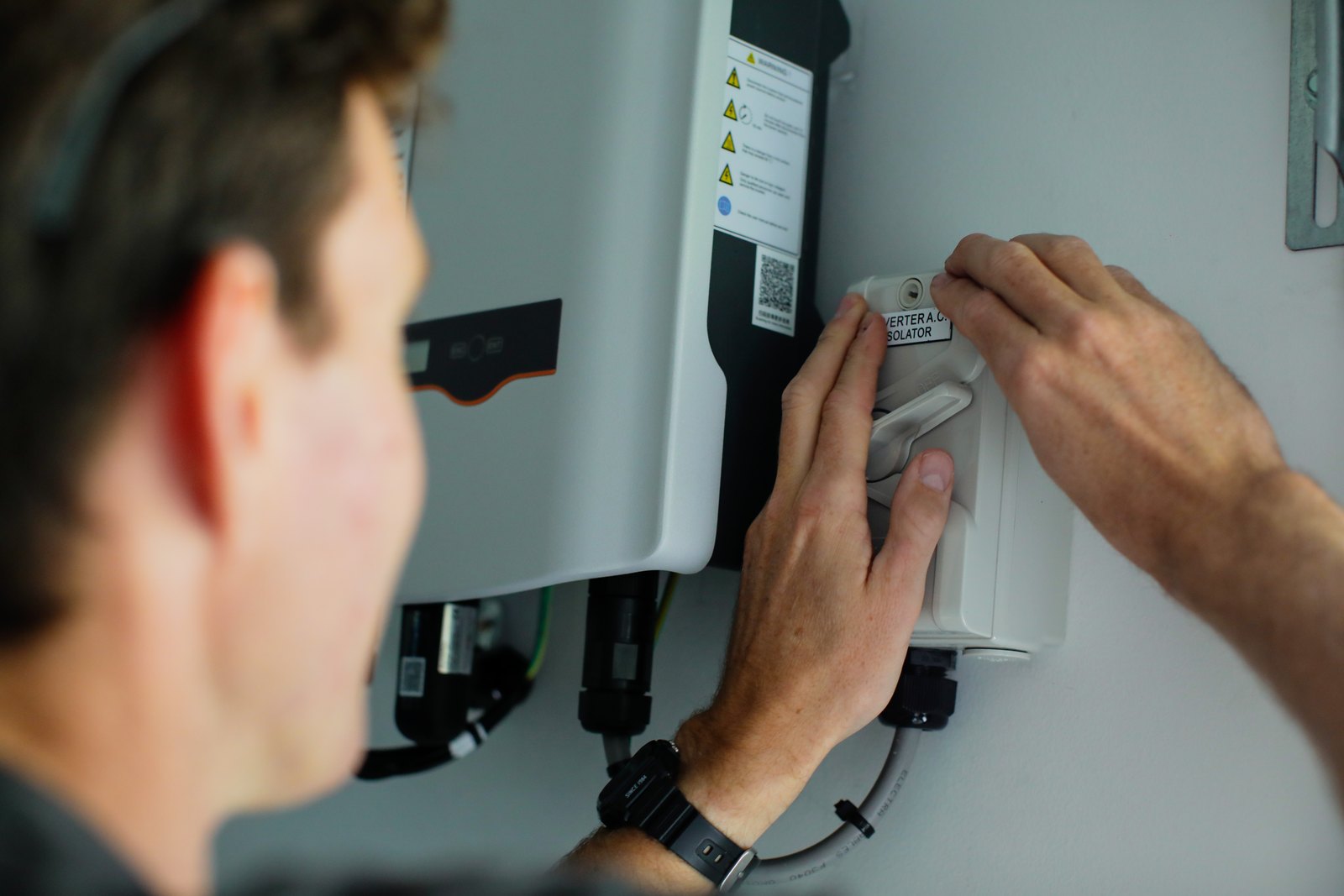
The right home charger fits your vehicle, parking space and electrical supply. A short assessment before installation helps you choose useful charging capacity and understand any extra work.
Start with your driving and parking
Tell the installer your vehicle model, typical driving distance and when the car is normally at home. A car parked overnight has different needs from one that is home briefly between trips.
The vehicle’s onboard AC charger can limit charging speed. A higher-rated wall unit does not necessarily make every car charge faster.
Check the electrical supply
A wall charger needs a suitable circuit and protective devices. The existing switchboard and total household demand must be assessed before the installation is agreed.
- Single or three-phase supply
- Available switchboard space and capacity
- Charger position and cable route
- Protection specified for the equipment
- Load management where appropriate
Decide how solar should fit
If the car is home during the day, a compatible charger may be able to use surplus solar. Monitoring and control equipment must be compatible with the installation.
Charging from a home battery needs a separate look at capacity, household priorities and losses. It should not be assumed to be the best arrangement for every household.
Make the installation practical
Think about the location of the vehicle’s charge port and a cable route that avoids walkways. Discuss weather exposure, Wi-Fi connectivity and tethered or socketed options.
Use charging equipment according to the vehicle and charger instructions. Do not rely on extension leads or improvised arrangements. A licensed electrician should assess the supply.
Talk through your next step
Your property and priorities set the brief. Explore home EV charging. Or request a free quote to discuss the work with our team.