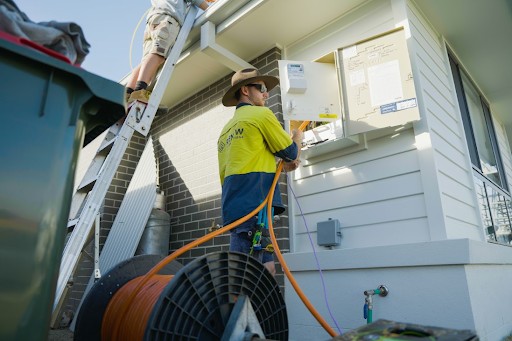
The project at a glance
Location: Banya, Sunshine Coast QLD 4551
Project type: New-build residential solar and battery installation
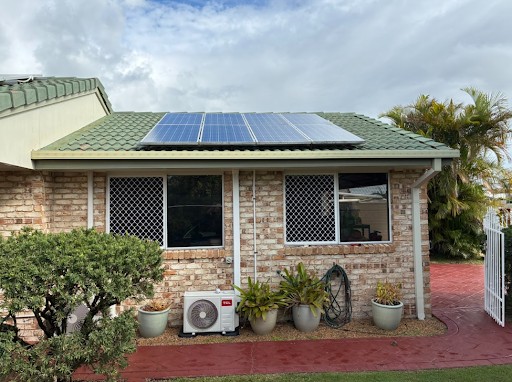
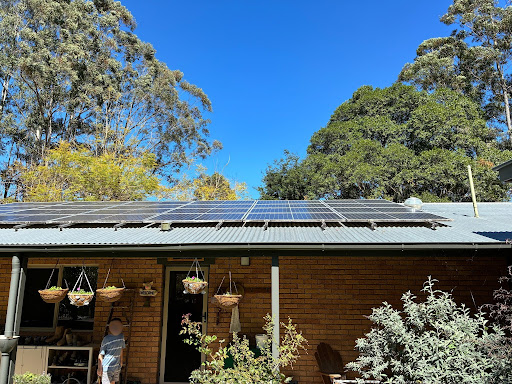
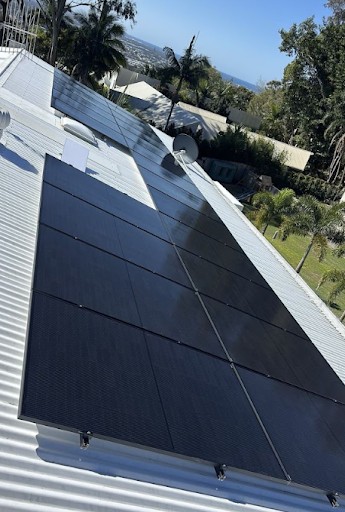
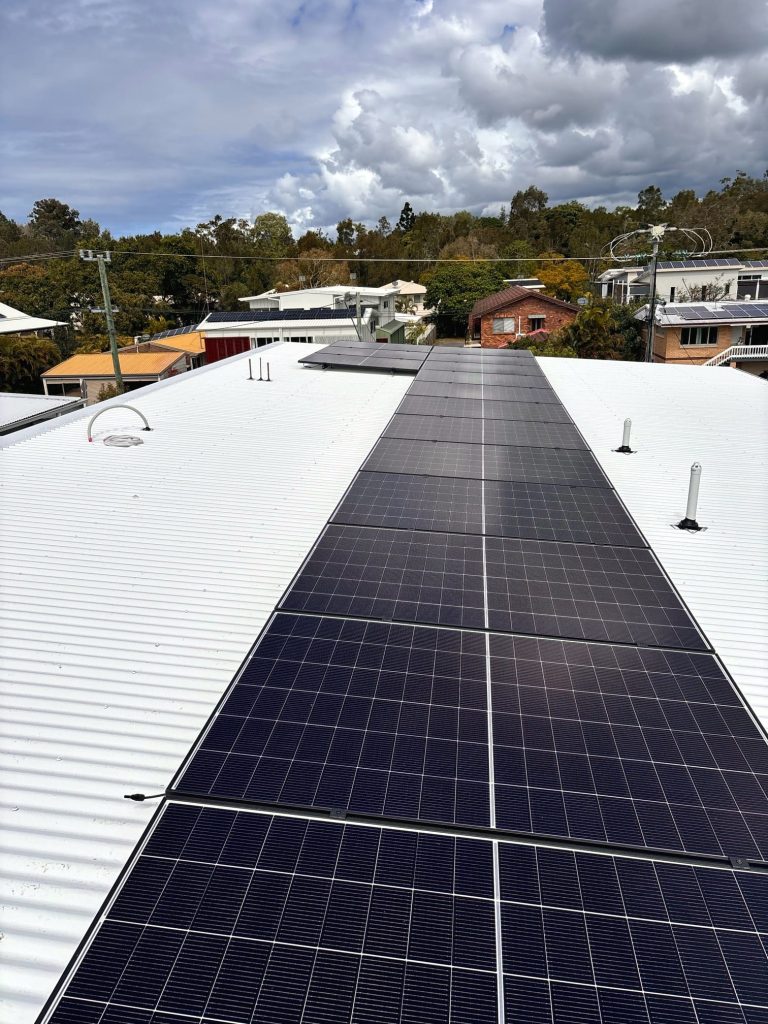
Solar: 32 Jinko 475 W panels, 15.2 kW total
Inverter: 10 kW GoodWe single-phase
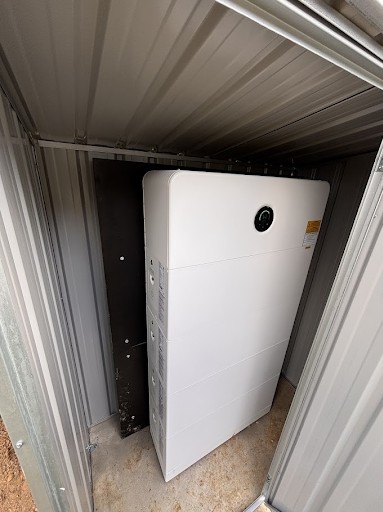
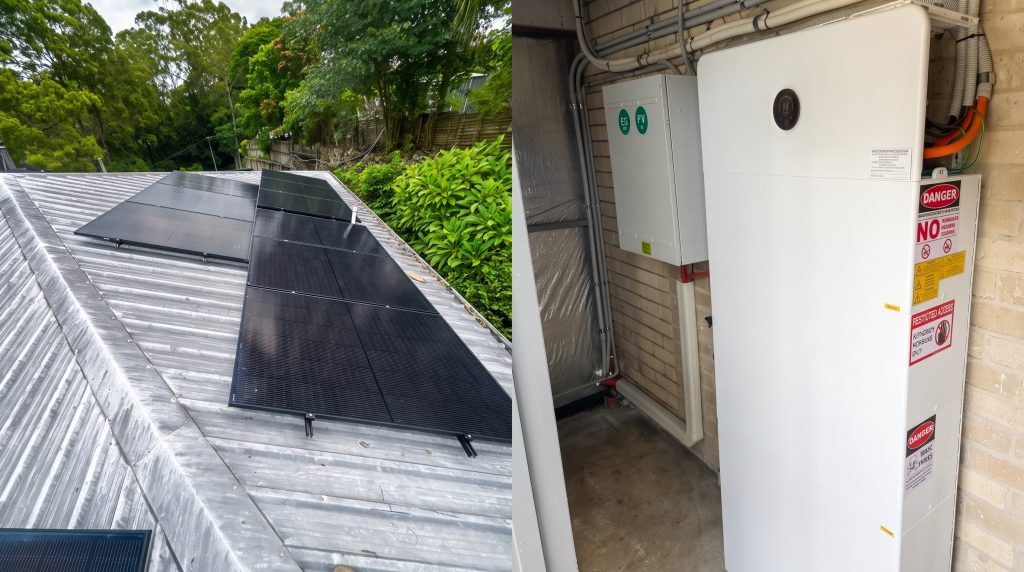
Battery: Three GoodWe 8 kWh units, 24 kWh total
Other works: Hot-water timer integration
The brief
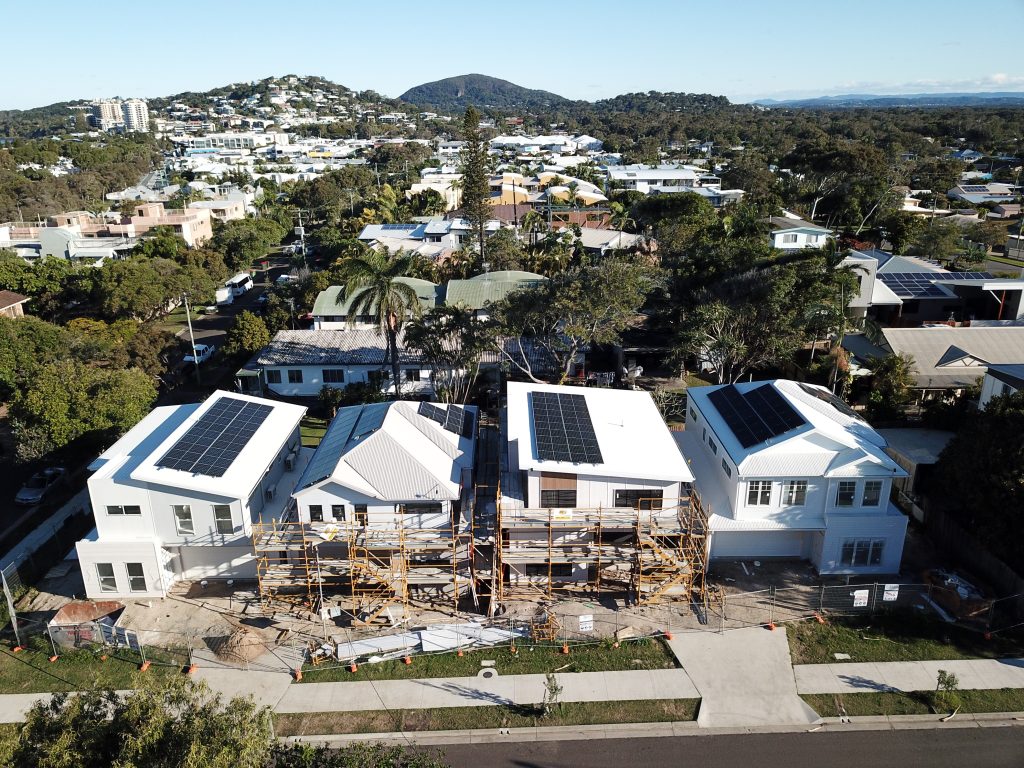
They came to us wanting the house to run off the roof during the day and off stored energy at night, with the grid as a last resort rather than the default. Because the build was still fresh, we could design the panels, battery, inverter position and hot-water timer as a single system and not a series of afterthoughts bolted on around each other. The result was a 15.2 kW solar array, 24 kWh of GoodWe battery storage and a 10 kW GoodWe single-phase inverter, all planned together from the start.
What we installed
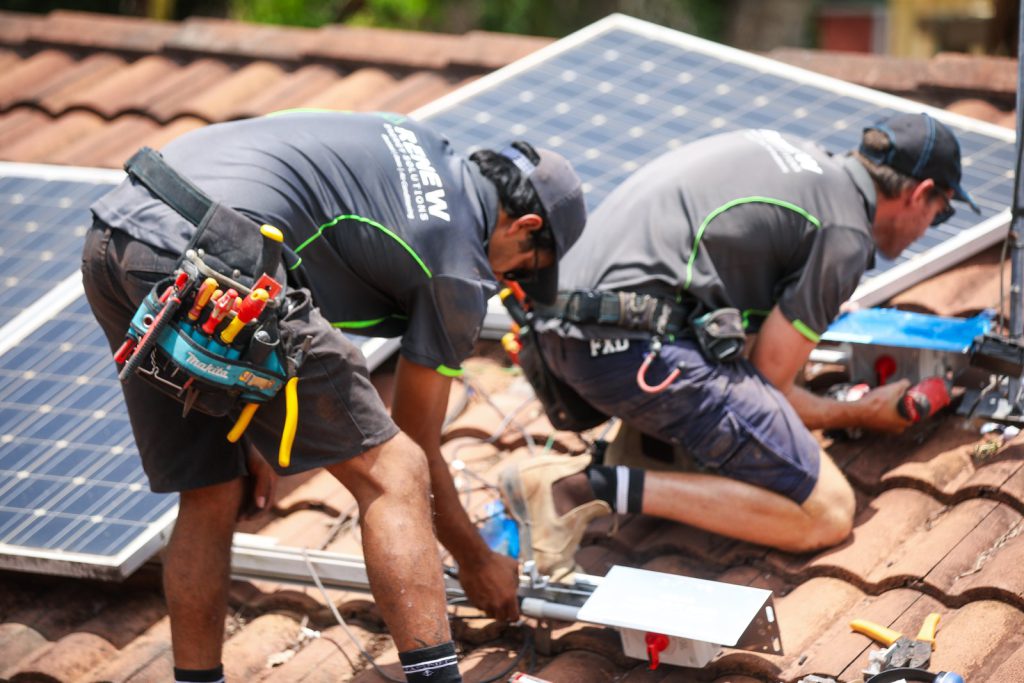
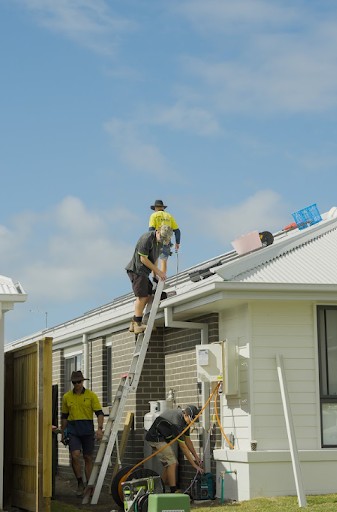
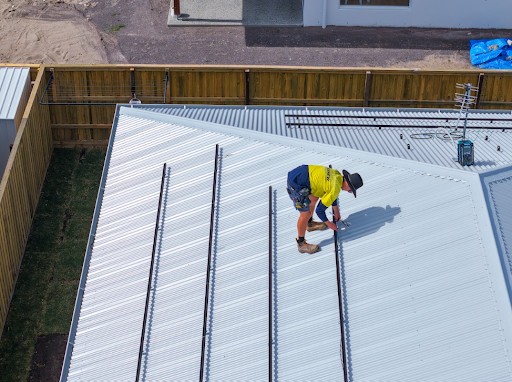
The roof took 32 Jinko 475 W panels, totalling 15.2 kW (32 x 475 W = 15,200 W). Storage came from three GoodWe 8 kWh batteries, giving 24 kWh in total. Everything ran through a single GoodWe 10 kW single-phase inverter, and we wired in a timer for the hot-water system as part of the same job. Both brands are on our Products We Support list, and the manufacturer specs are on the Jinko Solar and GoodWe sites.
Sizing a system for a new home
Usually we size a system from the last twelve months of electricity bills. A brand new house has no usage history of its own, so the numbers for this one came from the household’s expected usage. With no bill history to check against, a hot-water timer is a simple way for the house to use more of its own solar from day one.
Why 15.2 kW of panels and a 10 kW inverter
It looks mismatched until you see how panels behave. Panels only reach their rated output in ideal conditions, so across a normal day the array rarely pushes out the full 15.2 kW at once. The 10 kW inverter handles the real peak, feeds the house and charges the battery, while the extra panels keep generation up in the early morning, late afternoon and on cloudier days. It is the same logic behind the 6.6 kW arrays on 5 kW inverters in our Coolum Beach new-build townhouse project. The local network’s connection rules still set the final limits, so we check those before we size anything.
Why 24 kWh of storage
Battery size should follow what the house uses between sunset and sunrise, and what the roof can refill by the next afternoon. Three 8 kWh units give 24 kWh, and a 15.2 kW array has plenty of surplus to top that up on a decent day. Going bigger on the battery without the panels to fill it just leaves capacity sitting empty in winter, and going bigger on the panels without storage sends the extra to the grid for very little return. If you are weighing up storage for your own home, our battery storage page and Cheaper Home Batteries Program page cover the options and the current discount.
The garage and the 7 metre cable run
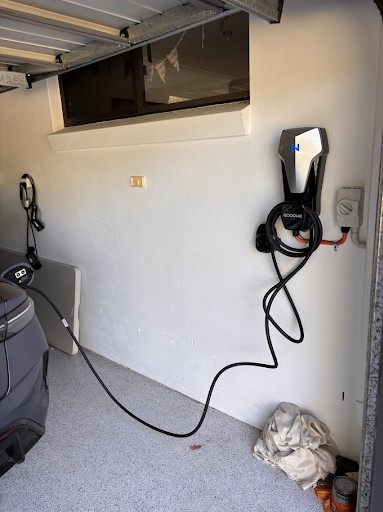
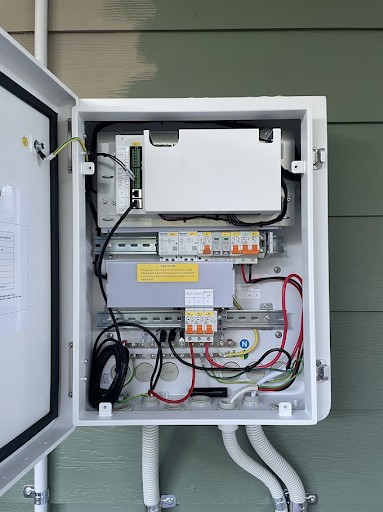
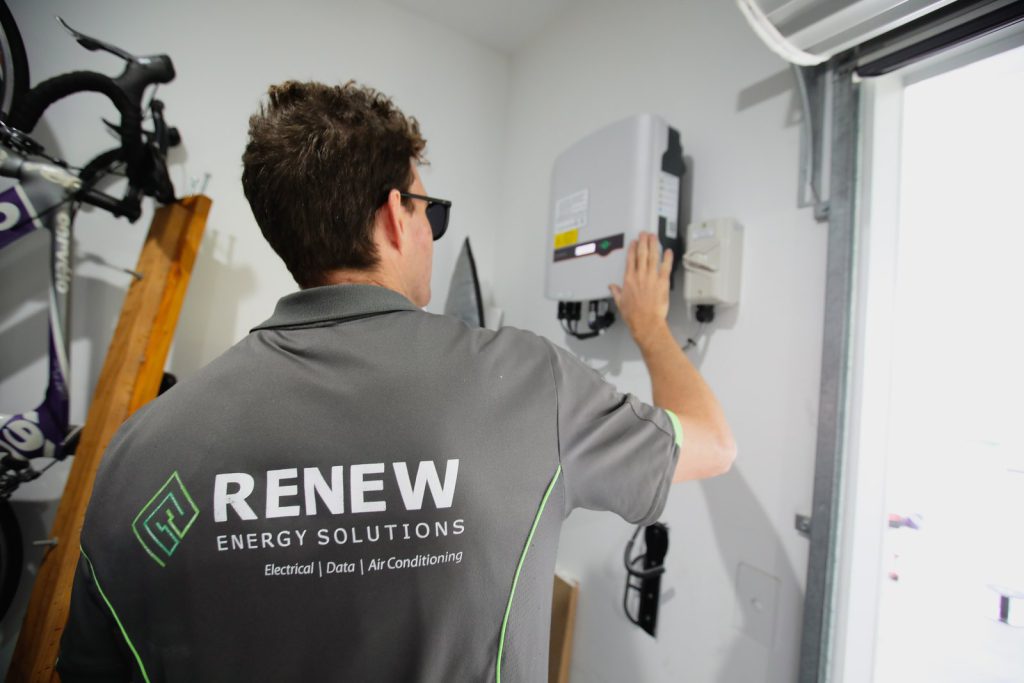
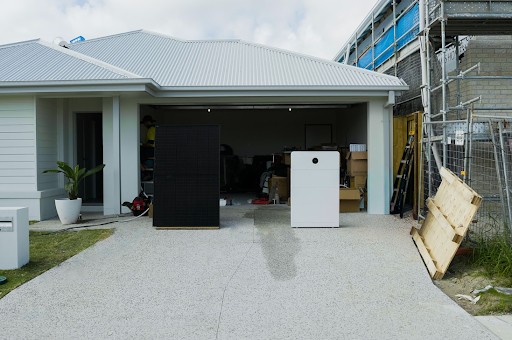
The battery and inverter were installed in the garage. That put the equipment roughly 7 metres of AC cable from where the system ties into the home’s electrical infrastructure. Seven metres is not far, but on a new build the cable size, route and protection had to be worked out against that distance, because it affects voltage drop and where the isolators and protection devices sit. Keeping the battery and inverter together in one spot also gives the homeowner a single place to check, service and isolate the system.
The hot-water timer
The job also included a hot-water timer integration. The timer was part of the job scope from the start, so it was planned with the rest of the electrical work instead of being added at the end. Hot water is one of the biggest single loads in a home, and it is easy to move. A timer lets the water heat while the panels are producing, which means that load is covered by the roof instead of the battery or the grid and leaves more stored energy for the evening.
Approvals before switch-on
Before the system could go live, it needed distributor approval, which is required before any solar system connects to the grid in Queensland. The Queensland Government’s guide to connecting solar to the grid explains the process. Approval, testing and commissioning decide the date a system actually switches on, so we plan for them from the first quote.
Why planning early mattered
Talk to your solar installer before the electrical plans are locked in. The garage position, the 7 metre run, the hot-water timer and the size of the array against the inverter were all easy decisions to make while the house was new. Moving any of them afterwards means opening up finished walls and ceilings.
Size the battery and the array as a pair. This system suits this household because 24 kWh of storage and 15.2 kW of panels were chosen to work together, not picked off a standard package. Another home with different usage would land on different numbers. We took the same approach on our Tewantin new-build project, where the solar was planned during construction too.
Ask who handles the approvals. Distributor approval and commissioning take time, and the answer tells you who is managing your switch-on date. Our solar panel installation page explains how we run the process from the first quote.
Frequently asked questions
What does 24 kWh of battery storage mean?
Kilowatt-hours (kWh) measure stored energy, while kilowatts (kW) measure how quickly power is used or delivered. This home has three 8 kWh GoodWe batteries, which gives 24 kWh of storage.
Will the battery keep the house running in a blackout?
That depends on the inverter, the backup wiring, the system settings and which circuits are connected. Ask what backup is included in the proposed design rather than relying on battery capacity alone.
Why does this system use a single-phase inverter?
Single-phase supply is common in Queensland homes, and the inverter has to match the supply the house has. The Banya system uses one 10 kW GoodWe single-phase inverter that handles both the solar input and the battery.
Can solar and battery storage be planned while a house is being built?
Yes. Planning early lets the installer settle the equipment location, the cable routes and the approval steps before the electrical plans are locked in, which is how we approached the Banya job.
Planning a similar upgrade?
If you are building or renovating and want solar and battery storage designed around your house, contact Renew Energy Solutions while the electrical plans are still open. We will look at the roof, the expected usage and the spots for the battery and inverter, then explain the options in a clear written quote before you decide anything. You can also call +61 495 104 430.