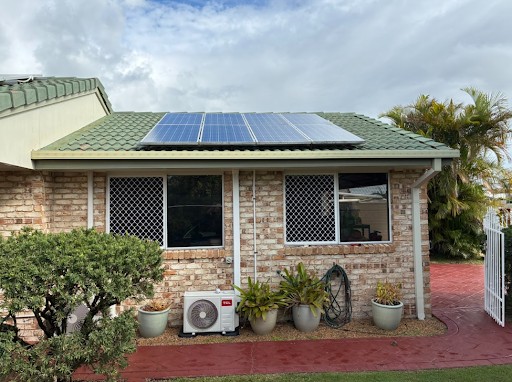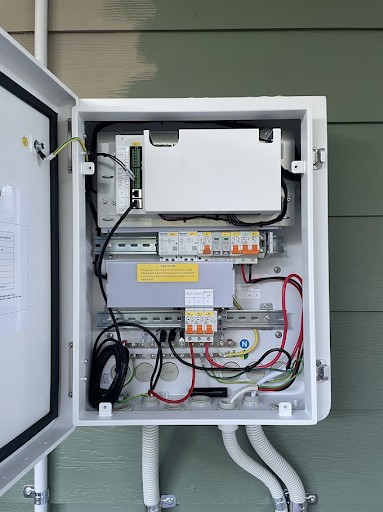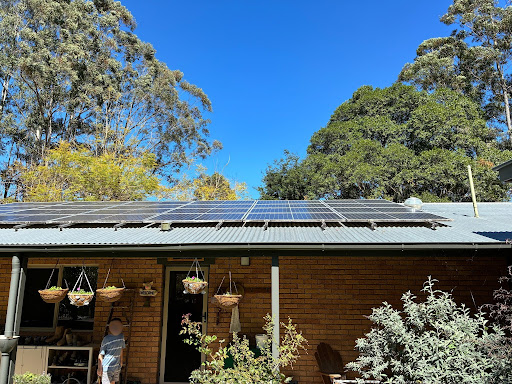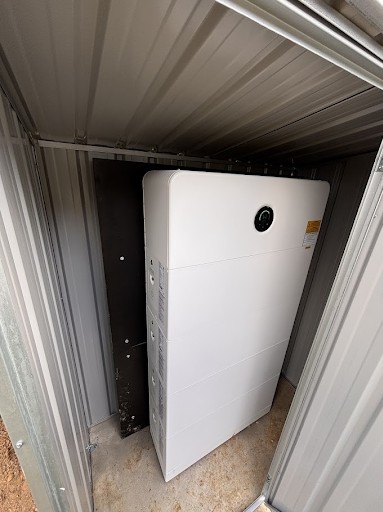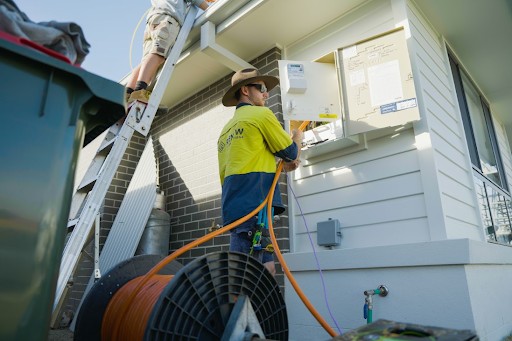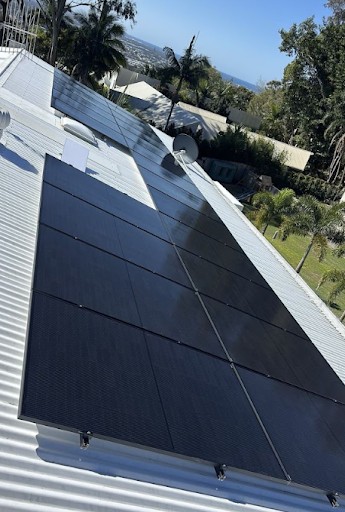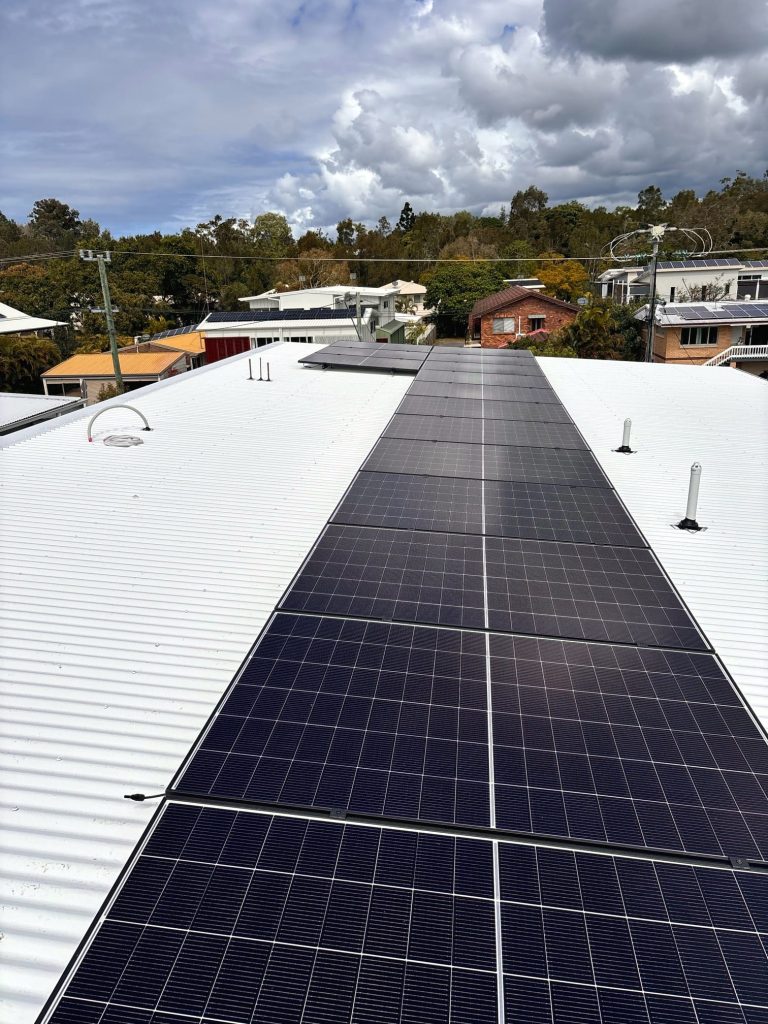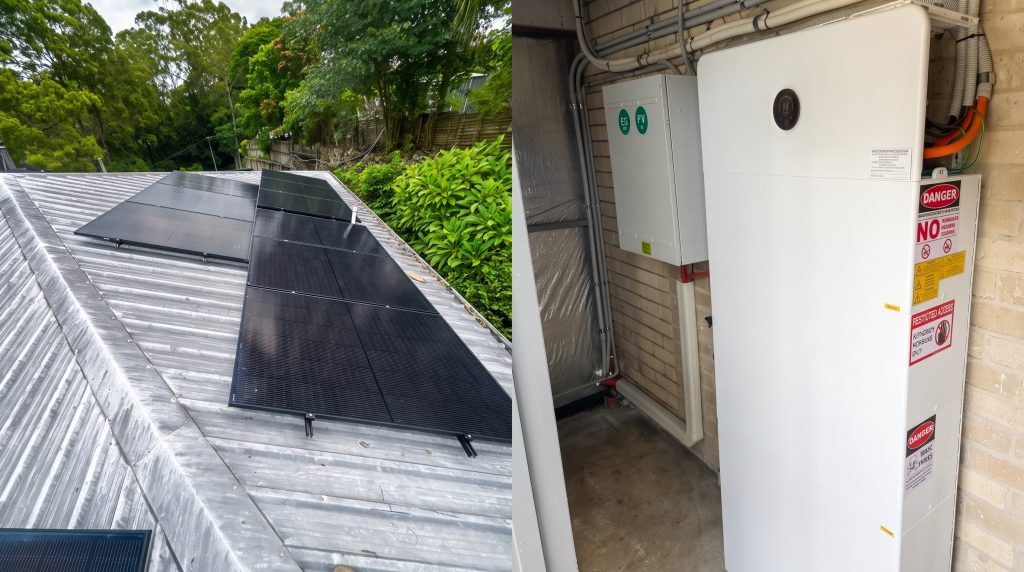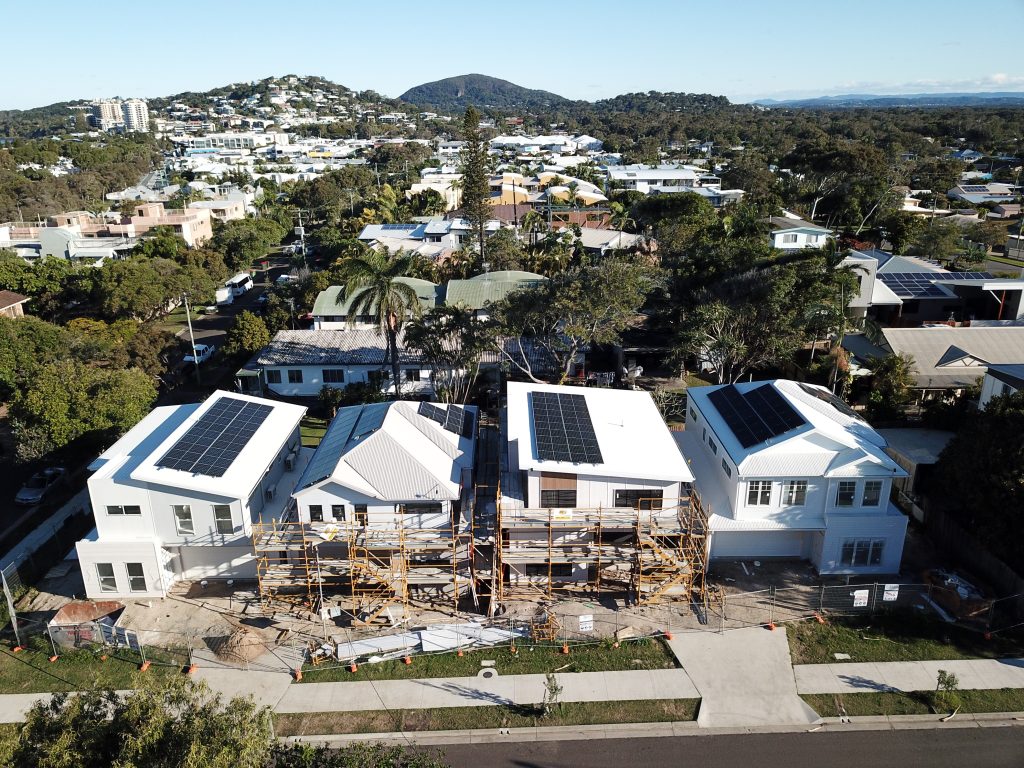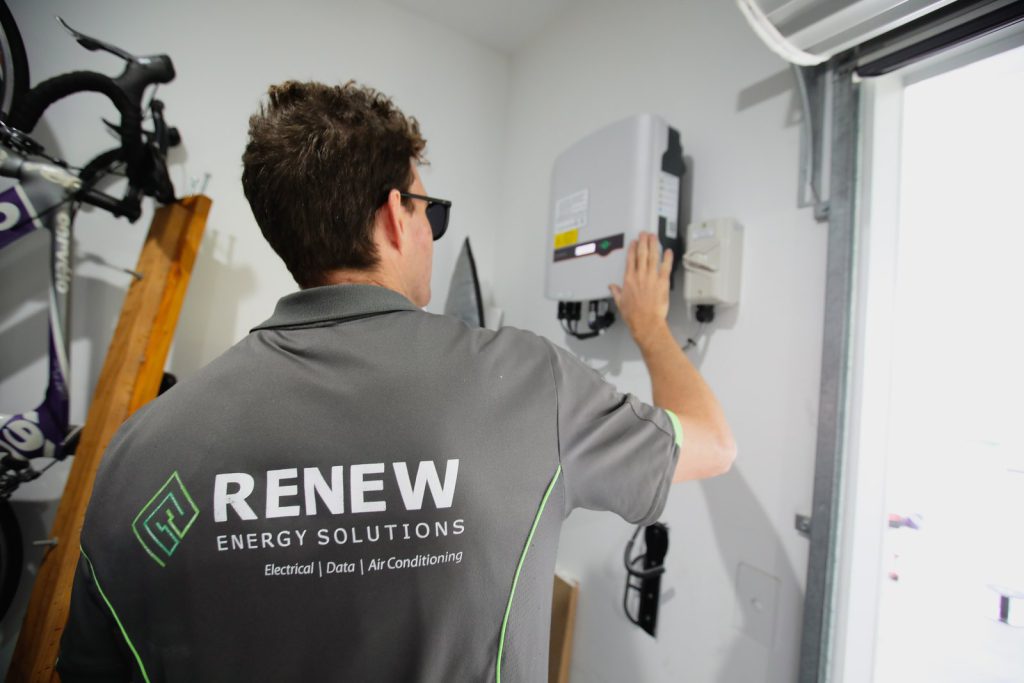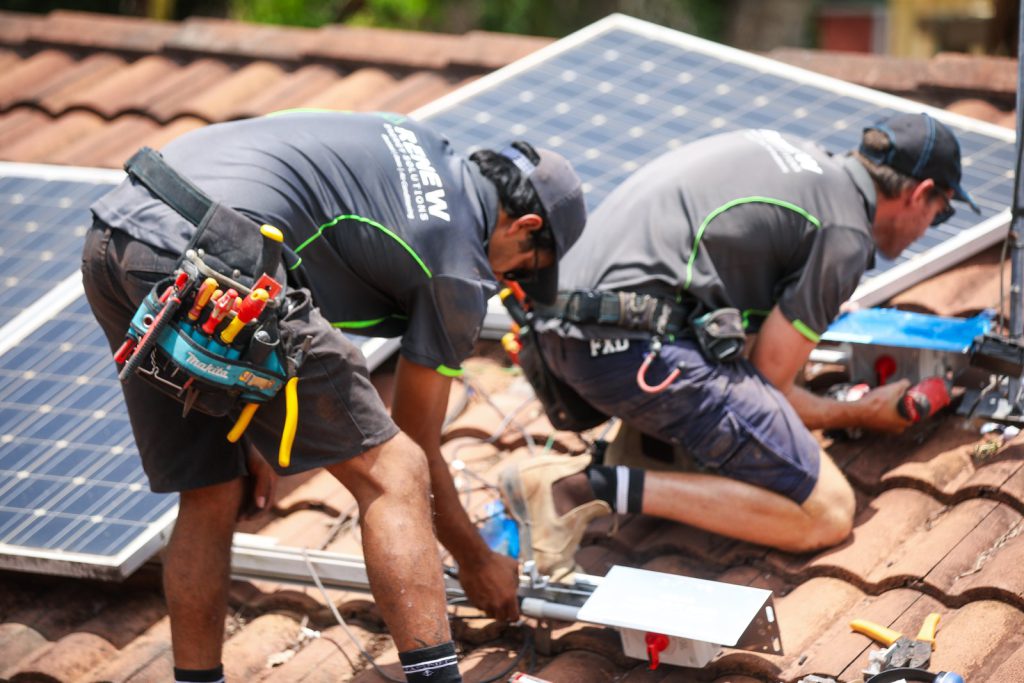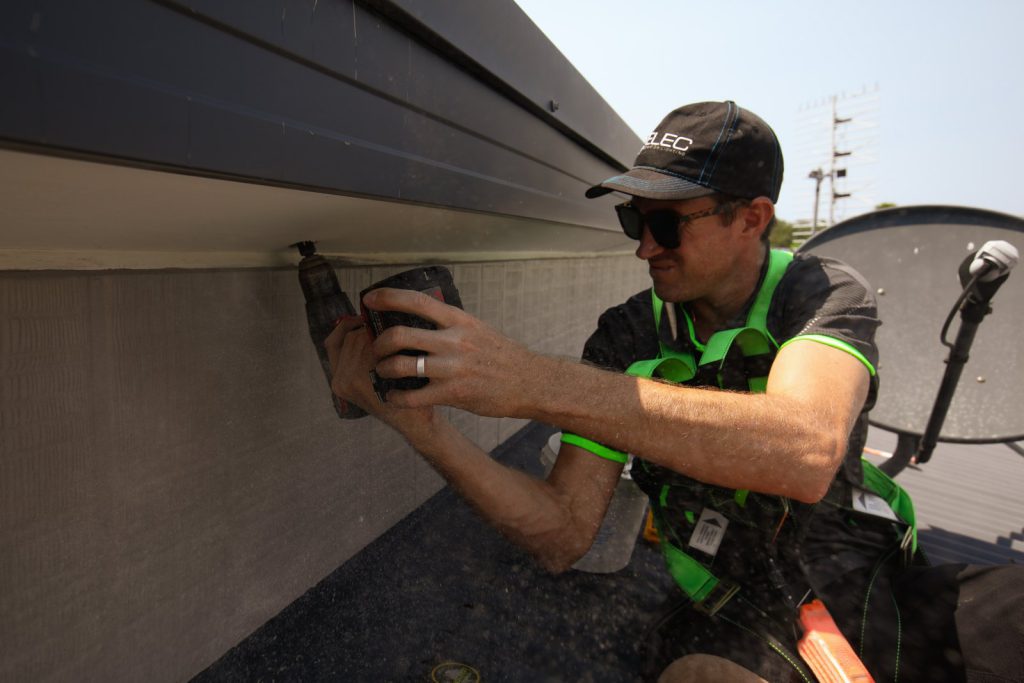
Renew Energy Solutions staged the upgrade on the existing home. We added 7.6kW of Jinko solar to the existing roof array, upgraded the property to three-phase, and installed a 10kW GoodWe battery inverter, 16kWh of battery storage, and a 22kW EV charger. The client later doubled the battery to 32kWh. The generator stayed, but as backup rather than the main supply. The finished upgrade meant the home ran on solar and battery first.
The project at a glance
Location: Image Flat, Sunshine Coast
Project type: Staged solar, battery, EV charging and electrical upgrade on an existing home
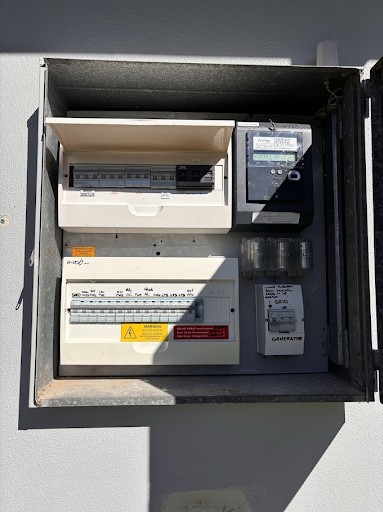
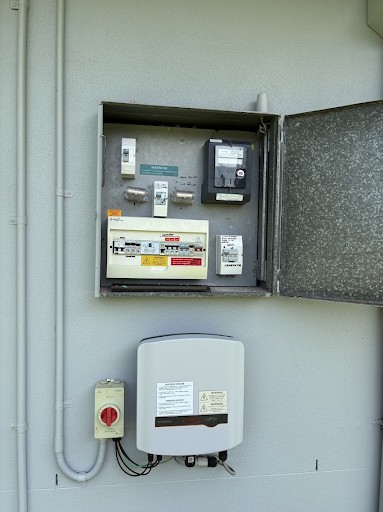
Electrical supply: Upgraded to three-phase with a full switchboard upgrade
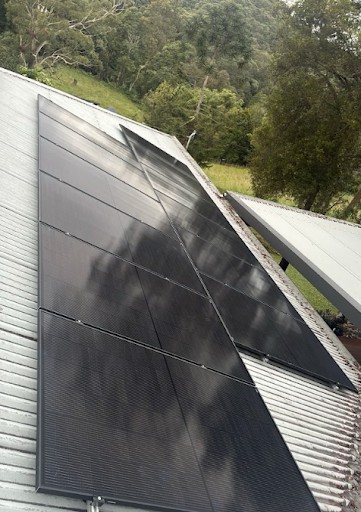
Solar: 16 Jinko 475W Tier 1 mono panels, 7.6kW added to the existing system
Inverter: 10kW three-phase GoodWe ESA battery inverter
Battery: GoodWe, four 8kWh modules, 32kWh total (16kWh at the first stage)
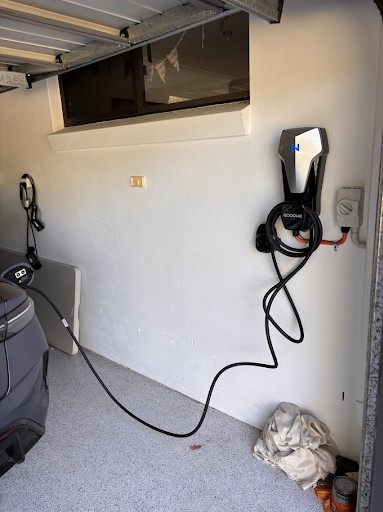
EV charging: 22kW EV charger
Monitoring: GoodWe smart meter and Wi-Fi monitoring
Generator: Existing generator integrated to support the home and recharge the batteries
Other works: Hot water timer
The brief
The house already had solar on the roof, and the generator was doing far too much of the work. The homeowner wanted to rely on it much less, but the generator would still stay as a backup. The new electric vehicle added a second goal: charging at home at a proper speed.
Nothing about this job started from scratch. The new equipment had to work with the existing solar array. The property also needed a three-phase upgrade to support a 22kW charger and a larger battery inverter. We wired the generator in as a secondary source rather than leaving it as a separate system. And because the project grew in stages, each stage had to work properly on its own and then work again once the next one was added.
What we did
On the roof, we added 16 Jinko 475W panels to the existing array. Inside, we installed a 10kW three-phase GoodWe ESA battery inverter with 16kWh of GoodWe battery storage as the first battery stage. We also installed a GoodWe smart meter and Wi-Fi monitoring so the homeowner could see where the power was coming from and where it was going. We installed the 22kW EV charger as part of the same stage.
The electrical work was as big a part of the job as the solar. We completed a full three-phase switchboard upgrade so the home could handle the new loads, and added a hot water timer as part of the package.
The generator needed the most thought. Rather than remove it, we integrated it so it could support the home and recharge the batteries when required. It was now a backup that could top up the system if needed, rather than running the house every day.
When the client later doubled the battery from 16kWh to 32kWh, we built on the existing system instead of starting over. That only worked if the first stage was done properly, which is why the early decisions mattered so much.
Getting solar, storage, generator backup, EV charging, hot water control and the switchboard to behave as one system was the real job. Each piece is simple enough on its own. The work was making sure they didn’t get in each other’s way.
The outcome
The system was set up to run the home on solar and battery power first, with the generator held back for when it was needed. The aim was to remove the generator from the daily routine while keeping backup in place for extra resilience.
The car charged at home through the same system, and the generator could still recharge the batteries when needed. One team looked after everything, from the roof to the switchboard, so the homeowner didn’t have to coordinate separate solar, battery, and electrical contractors.
There was a practical lesson in how this Image Flat solar and battery upgrade went. The homeowner did not have to start over when their needs changed. The battery doubled, the EV charger was already in place, and the generator kept its place as a safety net.
Why planning the whole system mattered
Adding a large EV charger to an existing home is not a plug-in job. A 22kW charger draws power across all three phases, so the supply and the switchboard have to be ready for it before anything else goes in. That is why the three-phase upgrade sat at the centre of this project.
Generators add another layer. A generator and the grid must never feed the same circuits at the same time, so a generator that supports the home and recharges batteries needs to be integrated by a licensed electrician with correct switching. Renew Energy Solutions holds electrical contractor licence EC82306, and we completed the generator work as part of the electrical scope, not as an afterthought.
Staged upgrades also reward planning. If you think you might add more storage later, ask at the start whether the inverter, the battery and the switchboard have room for it. Our system upgrades and expansions page covers this kind of work, and you can see the battery storage and EV charger options we install.
Frequently asked questions
Can a generator work alongside solar and a battery?
Yes, when it is wired in correctly. At Image Flat, we integrated the generator so it can support the home and recharge the batteries when needed. A licensed electrician needs to design the connection so the generator, the grid and the inverter never conflict.
Do I need three-phase power for a 22kW EV charger?
A 22kW charger needs a three-phase supply. Many cars cannot accept that much on AC charging, though, so check your vehicle’s onboard charger rating before you choose a charger. A slower charger can be a perfectly good fit.
What does 32kWh of battery storage mean?
Kilowatt-hours (kWh) measure how much energy a battery stores. Kilowatts (kW) measure how quickly power is delivered. This home has four 8kWh GoodWe modules, so the battery stores up to 32kWh, while the 10kW inverter sets how quickly that energy can flow.
Can I add more battery storage later?
Often, but it depends on the battery brand, the inverter and how many modules the system supports. At Image Flat, the battery started at 16kWh and was later doubled. If you want that option, ask about it before the first stage goes in.
Will the battery keep the house running in a blackout?
That depends on the inverter, the backup wiring, the system settings and which circuits are connected. Ask us what backup is included in the proposed design rather than relying on battery capacity alone.
Does changing to three-phase increase solar export limits?
Not automatically. Energex sets the connection and export rules for Sunshine Coast homes, and each system needs approval before installation. The Queensland Government explains the grid connection approval process, and we check the current requirements before installation.
Will solar and battery storage reduce power bills?
They can reduce the electricity you buy from the grid and cut how often a generator needs to run, when the system suits your home’s power use. Actual savings depend on electricity use, tariffs, and how you operate the battery.
Planning a similar upgrade?
Every home is different, so we start with your power supply and the system you want. Whether you need solar, a battery, an EV charger, a switchboard upgrade or all four, Renew Energy Solutions can plan the electrical work and the installation together. You can check the brands we install on our products we support page, or read how we handled a supply upgrade at Coes Creek.